Cheap PVC Hose vs Quality PVC Hose: Southeast Asia B2B Buying Guide
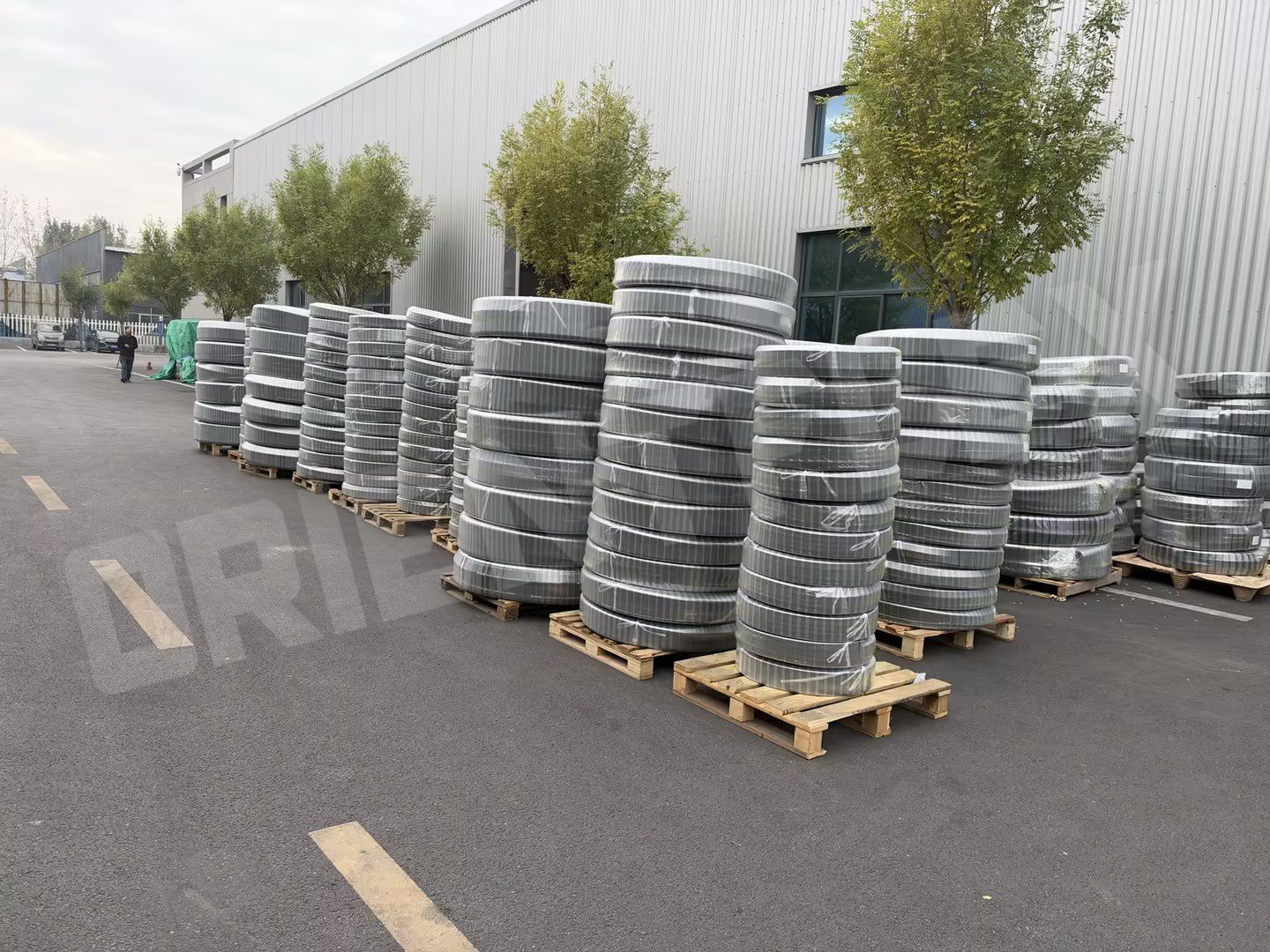
China is a major sourcing destination for hydraulic hoses used in construction equipment, agricultural machinery, mining operations, and industrial hydraulic systems. For importers in Southeast Asia, choosing a reliable Chinese hydraulic hose manufacturer requires more than comparing prices.
The best purchasing decision depends on verified SAE or EN standards, working pressure, temperature resistance, batch consistency, and total landed cost.
This guide explains how distributors and bulk buyers in Indonesia, Vietnam, Thailand, Malaysia, and the Philippines can evaluate Chinese hydraulic hose suppliers, reduce procurement risks, and build reliable wholesale supply chains.
1. Why Southeast Asian Importers Source Hydraulic Hoses from China
Hydraulic hoses are essential components in machinery operating under high fluid pressure.
They are widely used in:
Excavators and construction equipment
Agricultural tractors and harvesters
Mining and quarrying machinery
Forklifts and material handling equipment
Industrial hydraulic power systems
Port machinery and logistics equipment
For Southeast Asian importers, Chinese manufacturers offer several potential advantages.
Competitive Manufacturing Costs
China has an established industrial supply chain covering synthetic rubber compounds, steel-wire reinforcement, hose extrusion, braiding, spiral winding, and testing equipment.
This manufacturing ecosystem can support competitive pricing for bulk orders.
However, the lowest unit price does not necessarily represent the lowest purchasing cost.
A cheaper hose with inconsistent reinforcement or inadequate pressure resistance can lead to warranty claims, replacement costs, and customer dissatisfaction.
Broad Product Availability
Chinese suppliers may offer multiple hydraulic hose categories under one purchasing arrangement.
| Hydraulic Hose Type | Common Standard | Typical Application |
|---|---|---|
| Single steel-wire braided hose | SAE 100R1AT / EN 853 1SN | Medium-pressure hydraulic systems |
| Double steel-wire braided hose | SAE 100R2AT / EN 853 2SN | Higher-pressure hydraulic equipment |
| Four-wire spiral hose | EN 856 4SP | High-pressure heavy machinery |
| Four-wire spiral hose | EN 856 4SH | Heavy-duty hydraulic systems |
| Compact hydraulic hose | EN 857 1SC / 2SC | Space-constrained installations |
| Thermoplastic hydraulic hose | SAE 100R7 | Selected industrial and mobile hydraulic applications |
Important: These categories have different construction requirements and pressure ratings. Buyers should never treat them as interchangeable without checking the equipment specification.
Flexible Export Arrangements
Depending on the manufacturer, buyers may arrange:
Mixed-size container shipments
Private-label packaging
Custom hose markings
OEM product specifications
Regular wholesale replenishment orders
For large distributors, consolidating several hose specifications into one container can simplify inventory planning.
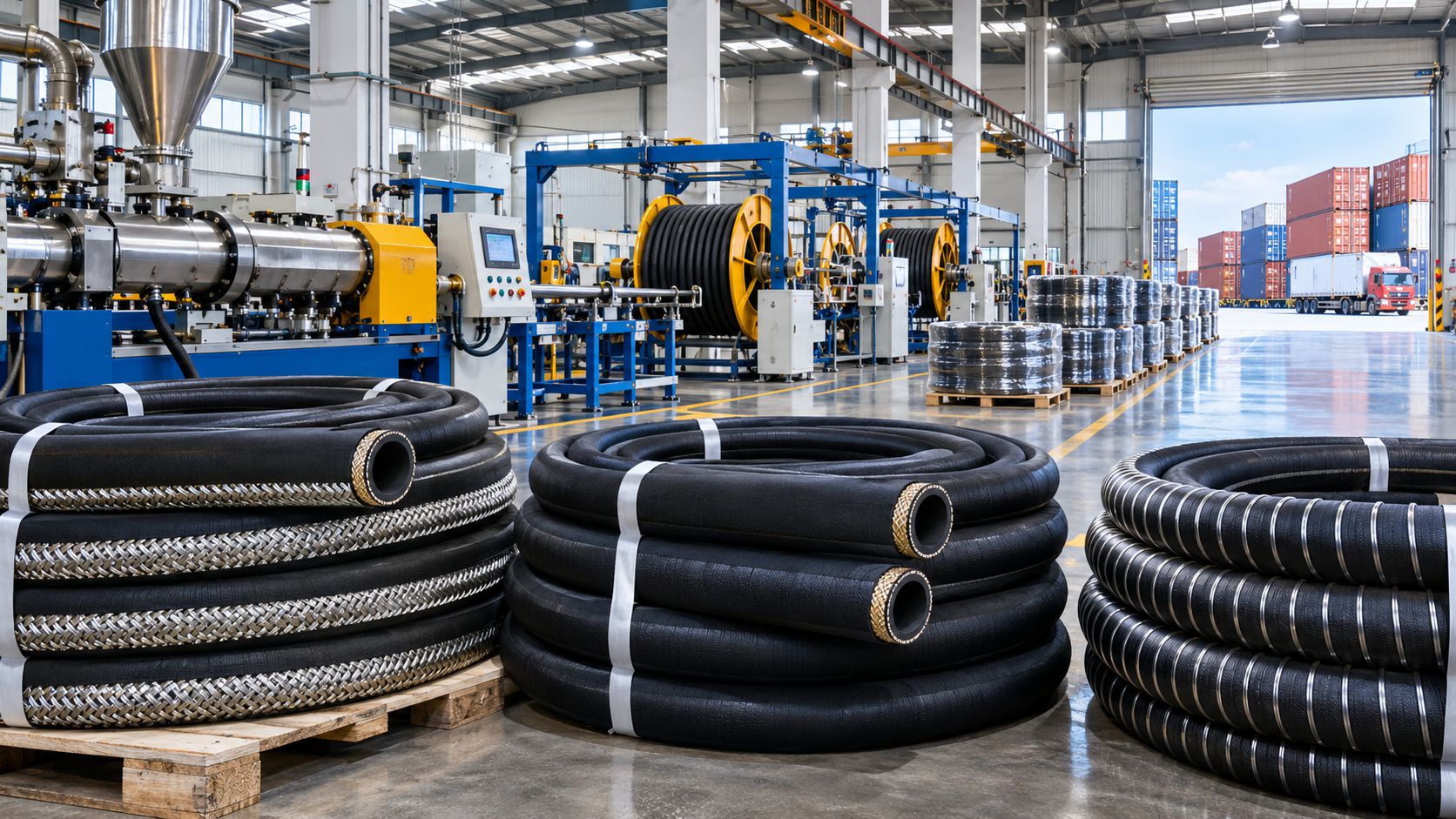 2. Hydraulic Hose Standards: SAE vs EN Specifications
One of the most important questions when selecting a hydraulic hose manufacturer in China is:
Does the supplier manufacture and test hoses according to the required international standard?
Two widely referenced standard families are SAE and EN.
Common Hydraulic Hose Standards
| Standard | Construction | General Pressure Category | Typical Use |
|---|---|---|---|
| SAE 100R1AT | One steel-wire braid | Medium | General hydraulic systems |
| SAE 100R2AT | Two steel-wire braids | Medium to high | Construction and industrial machinery |
| EN 853 1SN | One steel-wire braid | Medium | Industrial hydraulic equipment |
| EN 853 2SN | Two steel-wire braids | Medium to high | Mobile hydraulic machinery |
| EN 856 4SP | Four spiral steel-wire layers | High | Heavy-duty hydraulic systems |
| EN 856 4SH | Four spiral steel-wire layers | High | High-pressure heavy machinery |
| EN 857 2SC | Two steel-wire braids, compact design | Medium to high | Tight installation spaces |
SAE J517 defines requirements for multiple hydraulic hose types.
EN 853, EN 856, and EN 857 cover specific rubber hose constructions and performance requirements.
These standards help buyers evaluate hose dimensions, construction, pressure capability, and testing requirements.
However, a printed SAE or EN marking is not proof of compliance.
Importers should request test reports corresponding to the actual hose type, size, and production batch where applicable.
3. Hydraulic Hose Working Pressure: What Importers Must Check
Working pressure is one of the most critical hydraulic hose specifications.
A hose must withstand the maximum operating pressure of the hydraulic system, including relevant pressure surges and application requirements.
Example: SAE 100R2AT Working Pressure by Size
The following values are commonly published nominal working-pressure ratings for SAE 100R2AT hoses. Buyers should verify the applicable standard edition and the manufacturer’s approved datasheet.
| Nominal Hose ID | Dash Size | Working Pressure | Approx. PSI |
|---|---|---|---|
| 1/4 inch | -4 | 400 bar | 5,800 psi |
| 3/8 inch | -6 | 330 bar | 4,785 psi |
| 1/2 inch | -8 | 275 bar | 3,990 psi |
| 5/8 inch | -10 | 250 bar | 3,625 psi |
| 3/4 inch | -12 | 215 bar | 3,120 psi |
| 1 inch | -16 | 165 bar | 2,390 psi |
Reference values are rounded for readability. They are not a substitute for an approved product datasheet or assembly rating.
Working Pressure vs Burst Pressure
These two values should never be confused.
Working pressure refers to the maximum rated operating pressure under the specified conditions.
Minimum burst pressure refers to the pressure threshold established by a destructive pressure test.
Many common hydraulic hose standards specify a minimum burst-pressure-to-working-pressure ratio of 4:1.
For example:
| Parameter | Illustrative Value |
|---|---|
| Rated working pressure | 250 bar |
| Minimum burst pressure at 4:1 | 1,000 bar |
| Typical proof test at 2:1, where specified | 500 bar |
The 4:1 ratio does not mean a 250-bar hose can safely operate at 1,000 bar.
Actual system selection must consider pressure spikes, hose assembly ratings, fitting compatibility, fatigue, and applicable safety requirements.
For importers supplying hydraulic maintenance companies in Jakarta, Surabaya, Ho Chi Minh City, or Bangkok, incorrect pressure ratings can create serious safety and liability risks.
4. Choosing Hydraulic Hoses for Southeast Asia’s Climate
Southeast Asia presents several operating challenges for hydraulic hose distributors.
These include:
High ambient temperatures
Humid storage environments
Frequent rainfall
Outdoor UV exposure
Abrasion from construction and mining operations
Contact with hydraulic oil, mud, and industrial contaminants
Temperature Resistance
Many conventional rubber hydraulic hoses have a typical published operating temperature range of approximately -40°C to +100°C for compatible petroleum-based hydraulic fluids.
Some specialized hoses support higher temperatures, but the allowable temperature depends on the hose construction, fluid, pressure, and manufacturer’s specifications.
| Operating Condition | Potential Risk | Purchasing Recommendation |
|---|---|---|
| High ambient temperature | Accelerated rubber aging | Verify operating-temperature limits |
| Outdoor sunlight exposure | Cover degradation | Check UV and ozone resistance |
| Humid storage | Corrosion or material deterioration | Require suitable packaging and dry storage |
| Mining environments | Severe abrasion | Consider abrasion-resistant covers |
| Tight machine installations | Kinking and fatigue | Verify minimum bend radius |
| Frequent pressure cycling | Reinforcement fatigue | Review impulse-test performance |
Why Abrasion Resistance Matters
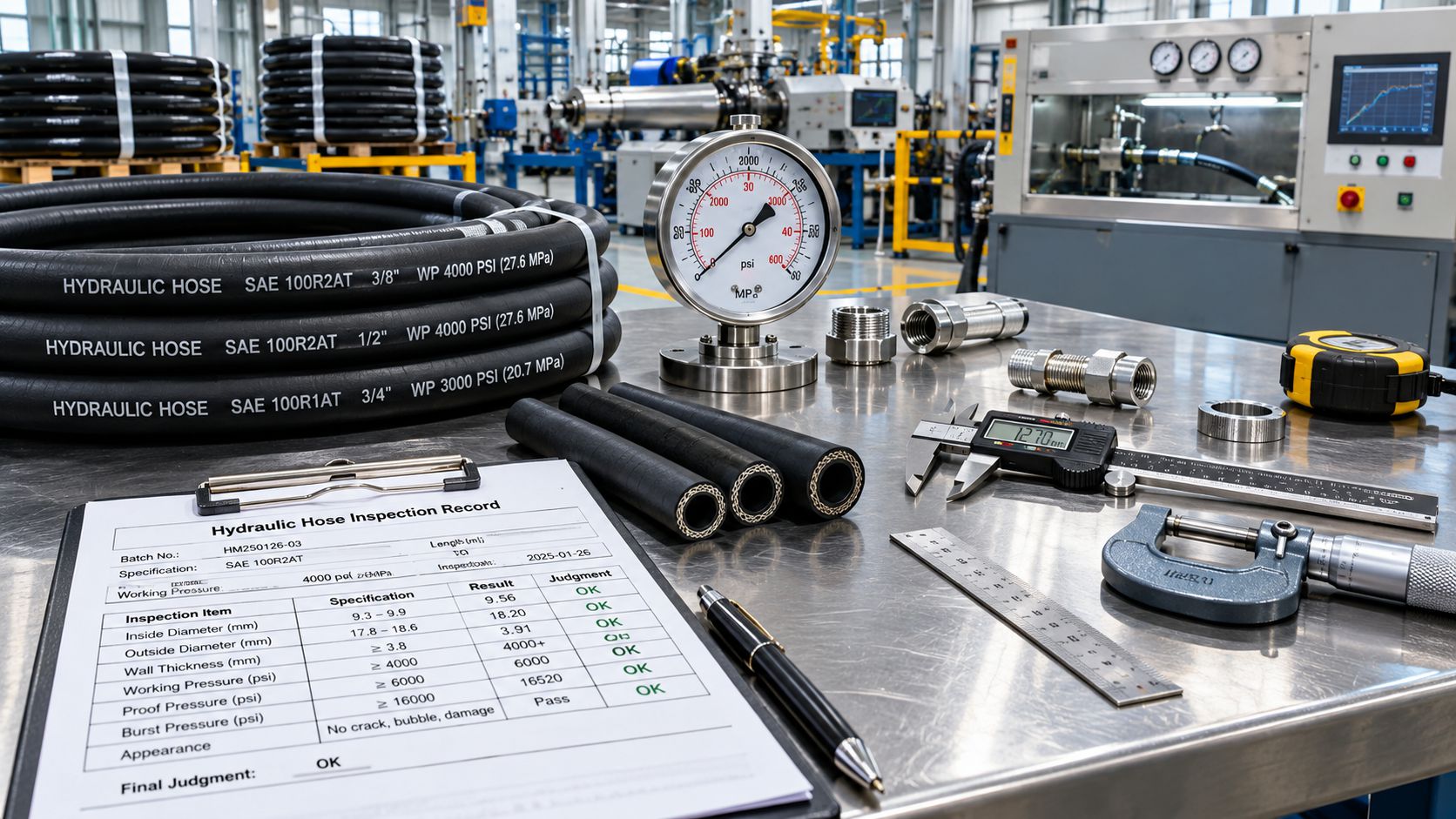
Hydraulic hoses installed on excavators, loaders, and mining equipment frequently contact metal surfaces, rocks, and machine components.
Poor abrasion resistance can shorten service life even when the hose meets its nominal pressure rating.
Importers serving mining contractors in Indonesia or construction-equipment distributors in Vietnam should ask manufacturers for abrasion-test evidence and suitable protective-cover options.
 5. Country-by-Country Hydraulic Hose Sourcing Guide
Southeast Asian countries share some industrial procurement requirements, but their distribution channels and end-use industries differ.
Understanding these differences helps importers choose appropriate product ranges.
Indonesia: Hydraulic Hoses for Mining and Heavy Equipment
Indonesia is an important market for hydraulic components used in mining, construction, agriculture, and industrial equipment.
Importers supplying Jakarta, Surabaya, Balikpapan, and other industrial locations often need hoses for equipment maintenance and replacement applications.
Potential product categories include:
SAE 100R2AT hydraulic hoses
EN 856 4SP spiral hydraulic hoses
EN 856 4SH high-pressure hoses
Abrasion-resistant hydraulic hoses
Importer recommendation: Prioritize pressure consistency, abrasion resistance, and reliable stock availability for frequently replaced hose sizes.
Relevant purchasing searches include hydraulic hose supplier Indonesia, hydraulic hose wholesale Jakarta, and hydraulic hose distributor Surabaya.
Vietnam: Hydraulic Hoses for Manufacturing and Construction
Vietnam has substantial manufacturing, construction, agricultural machinery, and industrial equipment activity.
Distributors in Ho Chi Minh City, Hanoi, and Hai Phong may serve factories, machinery maintenance companies, and equipment suppliers.
Common sourcing considerations include:
Consistent hose dimensions
Reliable pressure ratings
OEM branding availability
Mixed-size wholesale orders
Competitive landed cost
Importer recommendation: Compare hose specifications and test documentation rather than selecting products based only on quoted prices.
Relevant searches include hydraulic hose supplier Vietnam and hydraulic hose wholesale Ho Chi Minh City.
Thailand: Hydraulic Hoses for Industrial Machinery
Thailand’s automotive, manufacturing, agricultural machinery, and industrial sectors create demand for hydraulic components.
Importers in Bangkok, Chonburi, and Rayong may prioritize reliable performance, equipment compatibility, and technical documentation.
Potential purchasing requirements include:
EN 853 1SN and 2SN hoses
EN 857 compact hydraulic hoses
Consistent dimensional tolerances
Verified hose and fitting compatibility
Importer recommendation: Request complete technical datasheets, dimensional specifications, and test records before approving bulk production.
Philippines: Hydraulic Hoses for Construction and Agricultural Equipment
The Philippines has demand for hydraulic hoses in construction, agriculture, industrial maintenance, and material-handling applications.
Importers in Manila, Cebu, and Davao may require several hose sizes to support replacement and repair markets.
Important purchasing considerations include:
Availability of popular hose sizes
Resistance to outdoor operating conditions
Reliable export packaging
Stable wholesale supply
Replacement-order consistency
Importer recommendation: Build a product assortment around actual distributor sales records and local equipment requirements rather than purchasing every available hose specification.
Malaysia: Hydraulic Hoses for Industrial and Equipment Maintenance
Malaysia has industrial demand across manufacturing, construction, agricultural equipment, and maintenance operations.
Buyers in Kuala Lumpur, Selangor, Johor, and Penang may require technically documented hydraulic hoses for industrial distribution.
Importer recommendation: Focus on verified standards, product traceability, and consistent batch quality, especially when supplying industrial customers with formal purchasing requirements.
Southeast Asian Market Comparison
| Market | Important End-Use Industries | Common Procurement Priority |
|---|---|---|
| Indonesia | Mining, construction, agriculture | Abrasion resistance and pressure performance |
| Vietnam | Manufacturing, construction | Cost-performance balance and consistent supply |
| Thailand | Industrial machinery, agriculture | Technical specifications and equipment compatibility |
| Philippines | Construction, agriculture, maintenance | Mixed-size availability and replenishment |
| Malaysia | Manufacturing, industrial maintenance | Traceability and documented quality |
These are market-positioning recommendations, not measured national sales rankings. Actual demand should be validated with local distributors.
6. How to Evaluate a Reliable Hydraulic Hose Manufacturer in China
Not every hydraulic hose supplier operates its own manufacturing facility.
Some companies are manufacturers, while others are trading companies or sourcing agents.
Both models can serve importers, but buyers should understand who controls production, testing, and quality assurance.
Seven Essential Supplier Checks
Manufacturing capability: Confirm whether the supplier owns or directly manages hose production facilities.
Applicable standards: Request documentation for SAE, EN, or other standards relevant to the product.
Pressure testing: Verify working pressure, burst pressure, and applicable proof-testing procedures.
Impulse testing: Request fatigue-performance test evidence where required by the hose standard.
Material traceability: Check how production batches and raw materials are identified.
Export experience: Evaluate documentation, packing quality, and shipment coordination.
After-sales support: Confirm the process for handling dimensional defects, test failures, or warranty claims.
Supplier Evaluation Checklist
| Evaluation Item | Evidence to Request | Importance |
|---|---|---|
| Product standards | Applicable standard and test report | Critical |
| Working pressure | Size-specific technical datasheet | Critical |
| Burst pressure | Test results | Critical |
| Impulse resistance | Relevant test records | High |
| Dimensional consistency | Inspection report | High |
| Material traceability | Batch identification system | High |
| Export packaging | Packing specification or photos | Medium |
| OEM branding | Marking and packaging samples | Medium |
| Production lead time | Written production schedule | High |
A reliable supplier should be able to explain its testing methods and provide documentation for the products being quoted.
 7. Hydraulic Hose Quality Testing Before Shipment
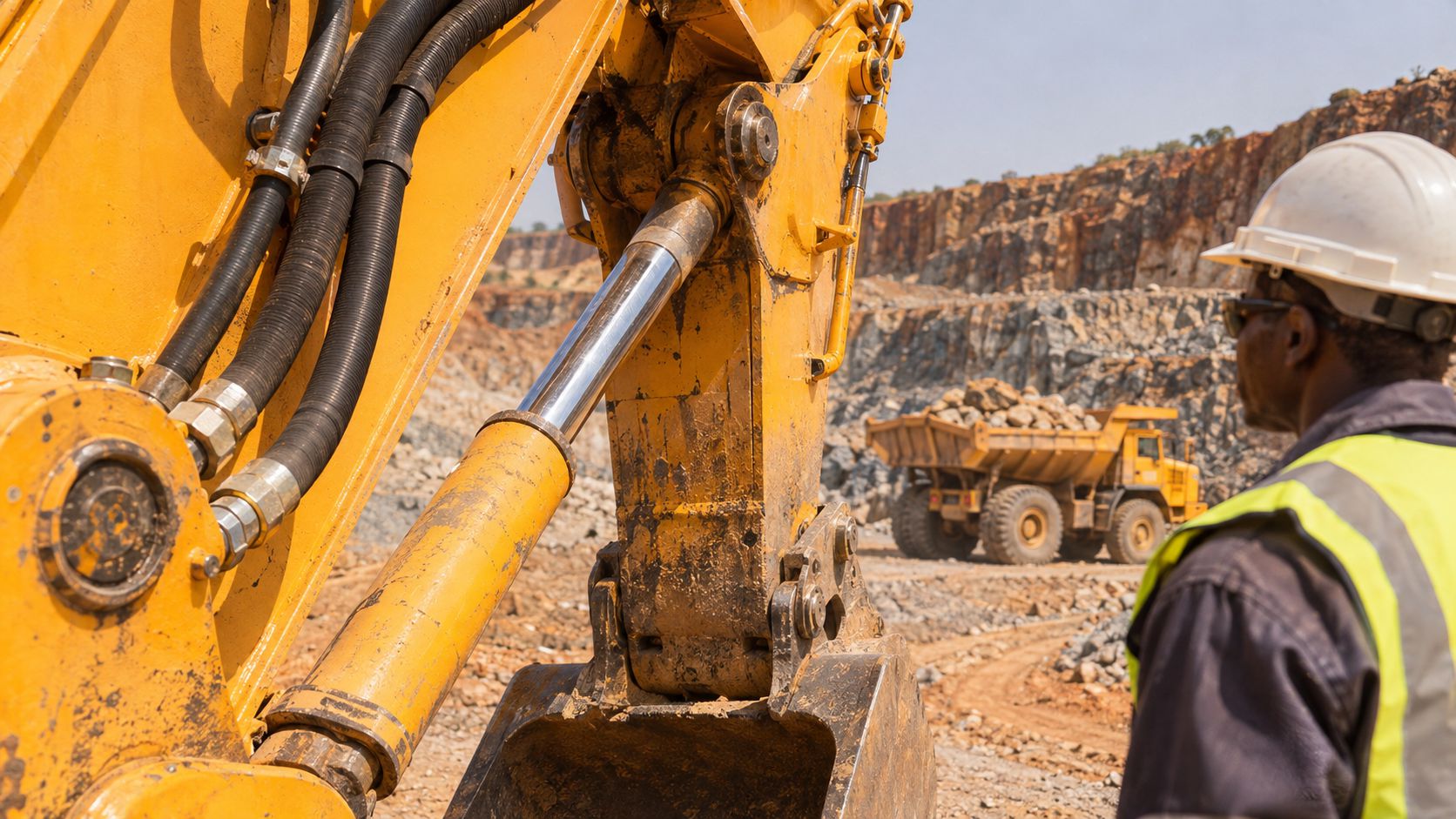
Bulk hydraulic hose orders should be subject to an agreed inspection plan.
Depending on the applicable product standard, inspection may include dimensional measurements, hydrostatic tests, burst tests, impulse tests, and visual inspection.
Recommended Pre-Shipment Inspection Plan
| Test or Inspection | Purpose |
|---|---|
| Inner diameter measurement | Verify dimensional conformity |
| Outer diameter measurement | Check consistency and fitting compatibility |
| Visual inspection | Identify cover defects or visible damage |
| Hydrostatic pressure test | Verify performance under specified test pressure |
| Burst pressure test | Confirm destructive pressure performance |
| Impulse test | Evaluate pressure-cycle fatigue resistance |
| Bend-radius verification | Check installation suitability |
| Marking inspection | Verify size, standard, and traceability information |
Not every test is necessarily performed on every finished hose.
Routine production checks, type tests, and batch sampling have different purposes.
Importers should agree on inspection frequency, acceptance criteria, and test-report requirements before placing the order.
For high-volume procurement, independent third-party inspection can provide additional assurance.
8. Hydraulic Hose Prices from China: What Determines the Cost?
The factory price of a hydraulic hose depends on several technical and commercial factors.
These include:
Hose construction
Inner diameter
Reinforcement material and design
Working-pressure rating
Rubber compound formulation
Cover properties
Order volume
Testing and documentation requirements
Packaging and private-label requirements
Why the Cheapest Hydraulic Hose May Cost More
Consider two hypothetical quotations.
| Cost Factor | Supplier A | Supplier B |
|---|---|---|
| Unit price | $1.80/m | $2.10/m |
| Order quantity | 10,000 m | 10,000 m |
| Product cost | $18,000 | $21,000 |
| Hypothetical defective quantity | 4% | 1% |
| Estimated defective length | 400 m | 100 m |
Supplier A has a lower initial purchase price.
However, if the lower-priced hoses generate more defects, the importer may face additional costs for replacements, transportation, labor, and warranty handling.
The figures above are illustrative, not actual supplier quotations or verified defect rates.
B2B buyers should compare total procurement cost rather than unit price alone.
9. Shipping Hydraulic Hoses from China to Southeast Asia
For wholesale distributors, containerized shipping is often a practical option for large orders.
Common Chinese export ports include Qingdao, Shanghai, Ningbo, and Shenzhen.
Destination ports vary by market.
| Destination Country | Major Import Port Examples |
|---|---|
| Indonesia | Tanjung Priok, Tanjung Perak |
| Vietnam | Cat Lai, Hai Phong |
| Thailand | Laem Chabang, Bangkok |
| Philippines | Manila, Cebu |
| Malaysia | Port Klang, Tanjung Pelepas |
Port selection depends on the buyer’s warehouse location, carrier routing, cargo handling requirements, and customs arrangements.
20GP vs 40HQ Containers
| Container Type | Approximate Internal Volume | General Consideration |
|---|---|---|
| 20GP | 33 m³ | Suitable for smaller containerized shipments or heavier cargo |
| 40HQ | 76 m³ | Suitable for higher-volume cargo when weight and loading constraints permit |
These are approximate container volumes, not guaranteed usable hose-loading capacities.
Actual loading quantities depend on hose diameter, coil dimensions, packaging, palletization, and allowable cargo weight.
For hydraulic hoses with steel-wire reinforcement, container weight limits can become important before the full cubic capacity is used.
Importers should request a loading plan showing net weight, gross weight, package dimensions, and estimated container utilization.
Understanding FOB, CIF, and Landed Cost
Importers commonly compare quotations under different Incoterms.
FOB China Port: The seller delivers the goods on board the vessel at the named port, with risk transferring according to the agreed FOB terms.
CIF Destination Port: The seller arranges and pays for carriage and the required minimum insurance to the named destination port, while risk generally transfers when the goods are on board at the shipment port.
Buyers should confirm the Incoterms 2020 rule and named port in the contract.
The landed cost calculation should consider:
\[ \text{Landed Cost} = \text{Product Cost} + \text{Freight} + \text{Insurance} + \text{Duties} + \text{Local Charges} \]
Import VAT, GST, and other applicable taxes should also be accounted for, depending on the country and the importer’s tax treatment.
Importers should verify the applicable HS classification, origin documentation, tariff treatment, and local import requirements with their customs broker.
Any preferential tariff treatment under relevant trade agreements depends on the specific product classification and rules of origin.
10. Common Mistakes When Importing Hydraulic Hoses from China
Mistake 1: Purchasing Based Only on Price
A low quotation may reflect different materials, construction, testing, or quality-control requirements.
Always compare equivalent technical specifications.
Mistake 2: Ignoring Hose and Fitting Compatibility
Hydraulic hose assemblies require compatible hoses, fittings, and crimping specifications.
A hose with an appropriate working-pressure rating may still be unsafe if assembled with incompatible fittings.
Mistake 3: Ordering Without Samples
Samples allow buyers to evaluate dimensions, markings, cover condition, and other product characteristics.
However, sample approval alone does not guarantee full-batch conformity.
Mistake 4: Failing to Confirm Product Markings
Markings should provide the identification required by the applicable product standard and agreed specification.
Importers may also require batch codes or additional private-label information.
Mistake 5: Overlooking Local Equipment Requirements
Hydraulic hose specifications used by mining equipment operators in Indonesia may differ from those used by industrial maintenance companies in Thailand.
Buyers should match their inventory to actual customer applications.
Mistake 6: Assuming All Hydraulic Hoses Are Interchangeable
SAE 100R2AT, EN 857 2SC, and EN 856 4SP hoses have different construction and dimensional requirements.
Substitution should only occur after confirming system requirements and component compatibility.
11. How to Request an Accurate Hydraulic Hose Quotation
A detailed request for quotation helps Chinese suppliers provide accurate pricing and technical information.
Importers should prepare the following information.
| RFQ Item | Example |
|---|---|
| Hose type | SAE 100R2AT |
| Inner diameter | 1/2 inch |
| Required working pressure | 275 bar |
| Quantity | 5,000 meters |
| Application | Excavator hydraulic system |
| Packaging | Export coils |
| Branding | Private label |
| Destination | Jakarta, Indonesia |
| Trade term | FOB Qingdao |
| Required documentation | Datasheet and applicable test reports |
Buyers should also specify whether they require bare hose, completed hydraulic hose assemblies, or both.
These products have different manufacturing, testing, and purchasing requirements.
12. Why Work with Orientflex for Industrial Hose Sourcing?
The following section is written for Orientflex’s website without assuming unverified hydraulic hose manufacturing capabilities or certifications.
For Southeast Asian importers, working with an established Chinese industrial hose supplier can simplify communication, export coordination, and bulk procurement.
Orientflex serves overseas industrial hose purchasing markets, with a product portfolio that includes PVC steel-wire reinforced hoses, PVC fiber reinforced hoses, PVC layflat hoses, PVC suction and discharge hoses, and PVC transparent hoses.
Importers sourcing several industrial hose categories can contact Orientflex to discuss wholesale quantities, export packaging, and container shipment requirements.
For hydraulic hose inquiries, buyers should confirm the availability of the exact hose construction, applicable standards, test documentation, and manufacturing arrangements before placing an order.
Important distinction: PVC industrial hoses and high-pressure rubber hydraulic hoses are not interchangeable. Product selection must follow the intended working pressure, media compatibility, and application requirements.
For bulk industrial hose sourcing, visit Orientflex’s official website.
13. Frequently Asked Questions About Hydraulic Hose Manufacturers in China
Q1. How can I find a reliable hydraulic hose manufacturer in China?
Start by identifying manufacturers offering the required SAE or EN hose specifications. Request technical datasheets, test reports, samples, manufacturing information, and export references. Compare pressure ratings, quality-control procedures, and total landed costs before selecting a supplier.
Q2. What is the difference between SAE 100R1AT and SAE 100R2AT hydraulic hoses?
SAE 100R1AT typically uses one steel-wire braid, while SAE 100R2AT uses two steel-wire braids. For comparable nominal sizes, 100R2AT generally provides a higher working-pressure rating. Exact specifications should be verified against the applicable standard and manufacturer datasheet.
Q3. Which hydraulic hoses are commonly used in excavators?
Excavators may use steel-wire braided or spiral-reinforced hydraulic hoses, depending on the hydraulic circuit, operating pressure, temperature, routing, and equipment manufacturer requirements. EN 853 2SN and EN 856 4SP/4SH are examples of hose categories used in heavy-equipment applications, but selection must follow the equipment specification.
Q4. Can Chinese hydraulic hose manufacturers provide OEM branding?
Some Chinese manufacturers offer custom hose markings, private-label packaging, and OEM production. Availability depends on the manufacturer, product specification, production quantity, and agreed commercial terms.
Q5. What is the minimum order quantity for wholesale hydraulic hoses?
MOQ varies by manufacturer, hose type, diameter, and customization requirements. Some suppliers accept smaller trial orders, while others prioritize bulk or containerized shipments. Buyers should request a size-by-size MOQ quotation.
Q6. How long does it take to ship hydraulic hoses from China to Southeast Asia?
Transit time depends on the Chinese loading port, destination port, carrier, routing, transshipment arrangements, and shipping schedule. Buyers should request a current freight quotation and estimated vessel schedule instead of relying on a fixed regional transit-time estimate.
Q7. Are Chinese hydraulic hoses suitable for tropical climates?
They can be suitable when their rated temperature range, fluid compatibility, cover resistance, and installation requirements match the operating conditions. Importers should verify performance specifications rather than assuming all hoses are designed for tropical environments.
Q8. What documents should Southeast Asian importers request?
Common documents include the commercial invoice, packing list, bill of lading, certificate of origin where applicable, technical datasheets, and agreed test or inspection reports. Additional documents may be required by the destination country’s customs or product regulations.
Q9. What is the difference between a hydraulic hose and a PVC steel-wire hose?
A high-pressure hydraulic hose generally uses rubber or thermoplastic materials with reinforcement engineered for hydraulic fluid systems.
A PVC steel-wire reinforced hose is commonly used for suction, discharge, and transfer applications within its rated limits.
A standard PVC steel-wire hose should not be substituted for a high-pressure hydraulic hose unless it has been specifically engineered, rated, and approved for that hydraulic application.
Q10. How can importers reduce hydraulic hose procurement costs?
Importers can reduce overall costs by consolidating compatible orders, optimizing container loading, selecting suitable hose specifications, comparing equivalent supplier quotations, and improving quality inspection. Avoid reducing costs by compromising pressure ratings or safety requirements.
14. Final Buying Recommendations for Southeast Asian Importers
Selecting a hydraulic hose manufacturer in China requires a balance between technical compliance, product reliability, and commercial efficiency.
For importers in Indonesia, Vietnam, Thailand, Malaysia, and the Philippines, the most important purchasing priorities are:
Verify applicable SAE or EN standards.
Confirm working pressure and temperature ratings.
Check reinforcement construction and abrasion resistance.
Review quality-control and testing documentation.
Evaluate hose and fitting compatibility.
Calculate total landed cost.
Agree on inspection and shipment requirements before production.
A reliable supply relationship should help importers reduce product failures, maintain consistent inventory, and serve industrial customers with confidence.
Looking for a Chinese Industrial Hose Supplier?
Orientflex welcomes inquiries from Southeast Asian importers, distributors, and industrial hose wholesalers seeking bulk purchasing solutions.
Share your required hose type, size, working pressure, quantity, and destination port to discuss product availability and export arrangements.
Contact Orientflex: www.orientflexhose.com
Related posts


